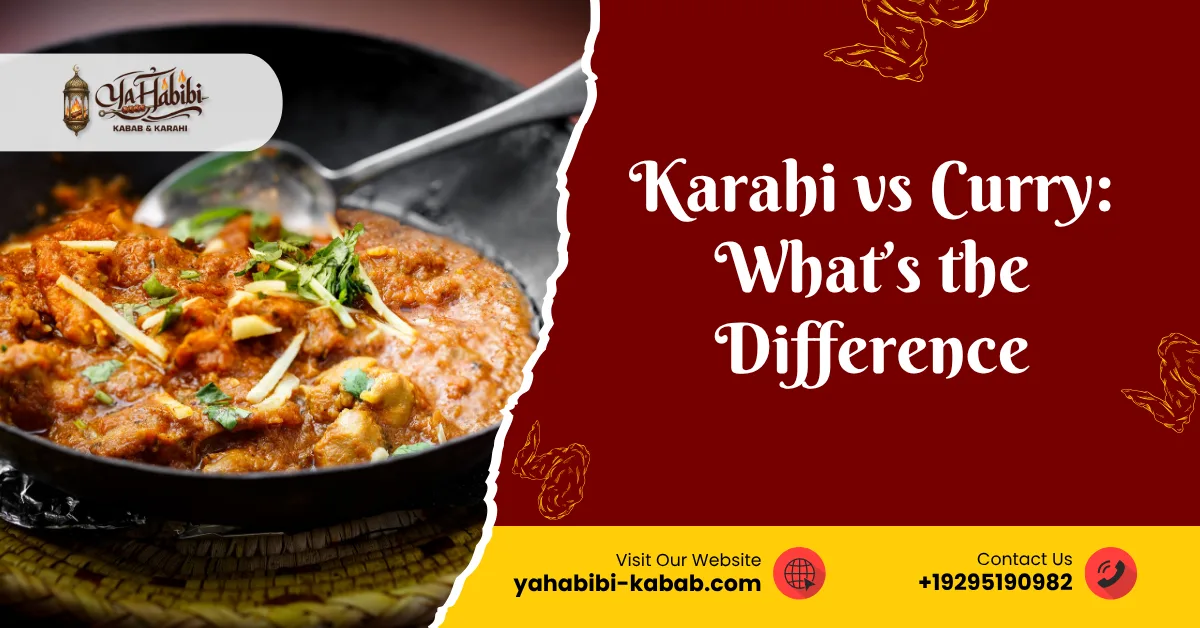
Karahi and curry can look similar on a restaurant menu, especially if both are served with meat, spices, and a rich sauce. But they are not the same dish. The difference comes from how they are cooked, the ingredients used, the amount of sauce, and the way the flavors develop.
Karahi is known for its concentrated texture, fresh aromatics, and distinct cooking style, while curry is a much broader term that covers many types of dishes with different bases, spice blends, and cooking methods. Knowing these differences can make it easier to choose what fits your taste, whether you prefer a thicker, more intense dish or something with more gravy and a different flavor profile.
If you live in Astoria or are visiting the neighborhood, understanding dishes like karahi can also help you explore traditional South Asian flavors with more confidence when ordering.
Karahi vs Curry: The Quick Answer
The simplest way to understand the difference is this: karahi is a specific South Asian dish and cooking style, while curry is a broad term used for many different spiced dishes. Karahi is usually defined by its cooking vessel, fresh aromatics, reduced sauce, and concentrated flavor. Curry can describe many preparations, from thin and gravy-based to creamy, dry, mild, or spicy.
The main differences usually come down to the cooking method, sauce consistency, ingredient base, and how strongly the flavors are concentrated.
|
Feature |
Karahi |
Curry |
|
Meaning |
Specific dish and cooking style |
Broad category of dishes |
|
Cooking Method |
Often cooked quickly over higher heat |
Varies widely |
|
Sauce |
Usually reduced and concentrated |
Can be thin, thick, creamy, or dry |
|
Common Base |
Tomatoes, ginger, garlic, chilies |
Depends on the curry |
|
Flavor |
Fresh, bold, concentrated |
Highly variable |
|
Common Pairings |
Naan, rice |
Depends on the dish |
What Is Karahi?
Karahi is both the name of a cooking vessel and the name of a dish prepared in that style. This connection between the pan and the food is important because the cooking vessel helps shape how the ingredients are heated, reduced, and brought together. In South Asian cooking, especially Pakistani cuisine, karahi is known for a focused ingredient list and a preparation that develops strong flavor without relying on a large amount of sauce.
Why Is It Called Karahi?
The dish takes its name from the karahi, a deep, round cooking pan with curved sides that is similar in shape to a wok. It is traditionally used over high heat, making it well suited for cooking meat, tomatoes, spices, and aromatics together.
Because the dish is prepared in this vessel, the name refers not only to what is being eaten but also to the method used to cook it.
Traditional Karahi Ingredients
Traditional karahi preparations often use a relatively direct combination of ingredients rather than a long list of additions. Common ingredients include meat, tomatoes, ginger, garlic, green chilies, fresh coriander, and selected spices.
The exact combination can change depending on the region, the cook, and the type of karahi being prepared. Some versions may be hotter, more tomato-forward, or more aromatic than others. This variation is part of the dish rather than a sign that one recipe is the only correct version.
How Karahi Is Traditionally Cooked
Karahi is commonly cooked over higher heat, allowing the meat and aromatics to develop flavor while excess moisture gradually reduces. Tomatoes often break down during cooking and form a thick coating around the meat rather than a large pool of gravy.
Fresh ginger, chilies, herbs, and spices are typically added in a way that keeps their aroma noticeable in the finished dish. The result is a concentrated preparation where the meat, sauce, and aromatics remain closely connected.
What Is Curry?
Curry is much broader than karahi. It does not refer to one fixed recipe, one cooking vessel, or one set of ingredients. Instead, the word is commonly used for a wide range of spiced dishes found across South Asia and in many other culinary traditions.
This is why two dishes described as curry can look, taste, and cook very differently. One may have a thin sauce, another may be creamy, and another may have almost no liquid at all.
Why “Curry” Is Such a Broad Term
The word “curry” is often used as an umbrella term for dishes built around spices, aromatics, and a cooked sauce or coating. It can include preparations from different countries, regions, and culinary traditions, each with its own methods and ingredients.
For diners, this means that seeing the word “curry” on a menu does not tell you exactly what the dish will taste like. The specific name of the curry usually gives more useful information.
Common Curry Bases and Ingredients
Different curries may use very different foundations. Common ingredients can include onion, tomato, yogurt, coconut milk, cream, stock, ground spices, and fresh herbs.
Some curries rely heavily on onions and spices. Others may use tomato for acidity, yogurt for tang, coconut milk for richness, or cream for a softer texture. These ingredients are not universal, and they should not be treated as a standard formula for every curry.
How Curry Cooking Methods Can Vary
Curry cooking methods are just as varied as the ingredients. Some dishes are slowly simmered to develop a deep sauce, while others are cooked more quickly. Some are reduced until thick, while others are intentionally left with more gravy.
There are also creamy curries, dry curries, braised preparations, and dishes where the sauce is built gradually in stages. Because curry covers such a wide range of styles, the cooking process depends on the specific dish rather than one single technique.
Karahi vs Curry: 6 Key Differences
The difference between karahi and curry goes beyond how spicy either dish may be. The pan, cooking method, amount of sauce, ingredient choices, and way the flavors develop all shape the final result. Looking at these elements side by side makes it easier to understand why karahi has its own culinary identity even though it may sometimes be grouped with curries.
1. Cooking Vessel
The karahi pan is closely tied to the identity of the dish. Its deep, curved shape provides a wide cooking surface that works well for high-heat cooking and moisture reduction.
Curry, by comparison, is not defined by one particular vessel. Depending on the recipe and region, a curry may be prepared in a pot, saucepan, handi, Dutch oven, or another type of cookware. With karahi, the vessel is part of both the name and the traditional preparation.
2. Cooking Technique
Karahi cooking commonly relies on higher heat and active reduction. Ingredients cook together as moisture evaporates, allowing the sauce to become more concentrated and cling closely to the meat.
Curry techniques are much more varied. Some curries simmer slowly for a long period, while others are braised, cooked quickly, or reduced in stages. The method depends on the specific curry rather than a single standard approach.
3. Sauce and Consistency
Karahi generally has less free-flowing gravy than many sauce-based curries. Tomatoes and meat juices cook down until the mixture becomes thicker, giving the dish a rich coating instead of a large amount of liquid around the meat.
A curry can have almost any consistency. Some are thin enough to spoon over rice, others are thick and creamy, and some are cooked until nearly dry. This wide range is another reason the word “curry” alone does not describe one particular texture.
4. Ingredients
Many karahi preparations center on fresh tomatoes, ginger, garlic, green chilies, coriander, meat, and selected spices. Fresh aromatics play an important role in giving the dish its recognizable character.
Curries can draw from a much wider range of ingredients. Depending on the recipe, the base may include onions, tomatoes, yogurt, coconut milk, stock, cream, ground spices, or fresh herbs. The ingredient profile can change significantly between one curry and another.
5. Flavor
Karahi is typically known for a fresh, aromatic, and concentrated flavor profile. Tomatoes can provide acidity and body, while ginger, garlic, chilies, herbs, and spices add layers of aroma and heat. Because the sauce is reduced, these flavors often stay pronounced in each bite.
There is no single flavor that defines curry. One curry might be rich and creamy, another sharp and spicy, and another mild, earthy, or coconut-forward. Its taste depends on the region, recipe, and ingredients used.
6. Serving Style
Karahi is commonly enjoyed with naan or roti, which can be used to pick up pieces of meat and the thick sauce. Rice may also be served alongside it.
Curries can pair with naan, roti, rice, or other regional breads depending on the preparation. Salad, chutney, and yogurt-based sides can accompany either style, especially when diners want something fresh or cooling alongside a richly spiced meal.
Final Thoughts: Understanding Karahi Beyond the Word “Curry”
The clearest distinction is that curry is a broad culinary category, while karahi has a more specific identity shaped by its cooking vessel, preparation style, texture, and characteristic use of fresh aromatics. Knowing the name of a dish and how it is traditionally prepared can give you a much better idea of what to expect than relying on the word “curry” alone.
For anyone exploring South Asian food, learning these distinctions can also make restaurant menus easier to understand and help you discover dishes based on the flavors and textures you actually enjoy.
If you’re in Astoria and want to explore karahi for yourself, visit Ya Habibi Kabab & Karahi at 25-79 Steinway St, Astoria, NY 11103, or browse the Ya Habibi menu before your visit.
Frequently Asked Questions About Karahi vs Curry
People comparing karahi vs curry often have practical questions about heat, ingredients, gravy, and how each dish is served. The answers below cover some of the most common points diners may want to understand before ordering.
Is karahi the same as curry?
Not exactly. Curry is a broad term for many types of spiced dishes, while karahi refers to a more specific South Asian cooking style and dish traditionally associated with the karahi pan. In broad English usage, karahi may sometimes be described as a type of curry, but its preparation and identity are more specific.
What is the main difference between chicken karahi and chicken curry?
Chicken karahi is typically prepared with fresh tomatoes, ginger, garlic, chilies, and spices, with the sauce cooked down around the chicken. Chicken curry can use many different bases and techniques, so it may be thinner, creamier, milder, or more gravy-heavy depending on the recipe.
Is karahi spicy?
It can be, but karahi does not have one fixed heat level. Green chilies and spices often provide noticeable heat, while the amount used can be adjusted according to the recipe or the cook’s preference.
Does karahi contain curry powder?
Traditional karahi is not defined by packaged curry powder. Its flavor is usually developed through individual spices along with fresh ingredients such as ginger, garlic, tomatoes, chilies, and herbs.
Does karahi have a lot of gravy?
Karahi usually has a more reduced sauce rather than a large amount of loose gravy. As the ingredients cook, moisture evaporates and the sauce thickens around the meat. The exact consistency can still vary between preparations.
What meat is used in karahi?
Karahi can be prepared with several types of meat. Chicken, goat or mutton, lamb, and beef are common choices, although availability and preparation styles vary by restaurant and region.
What bread goes best with karahi?
Naan and roti are both popular choices because they work well with karahi’s thick sauce and pieces of meat. The choice often comes down to personal preference and what is available with the meal.
Where can I try karahi in Astoria?
If you are exploring karahi in Astoria, you can visit Ya Habibi Kabab & Karahi at 25-79 Steinway St, Astoria, NY 11103. The restaurant serves karahi alongside kababs, grilled dishes, and other freshly prepared menu options, making it a convenient stop for diners interested in exploring these flavors on Steinway Street.